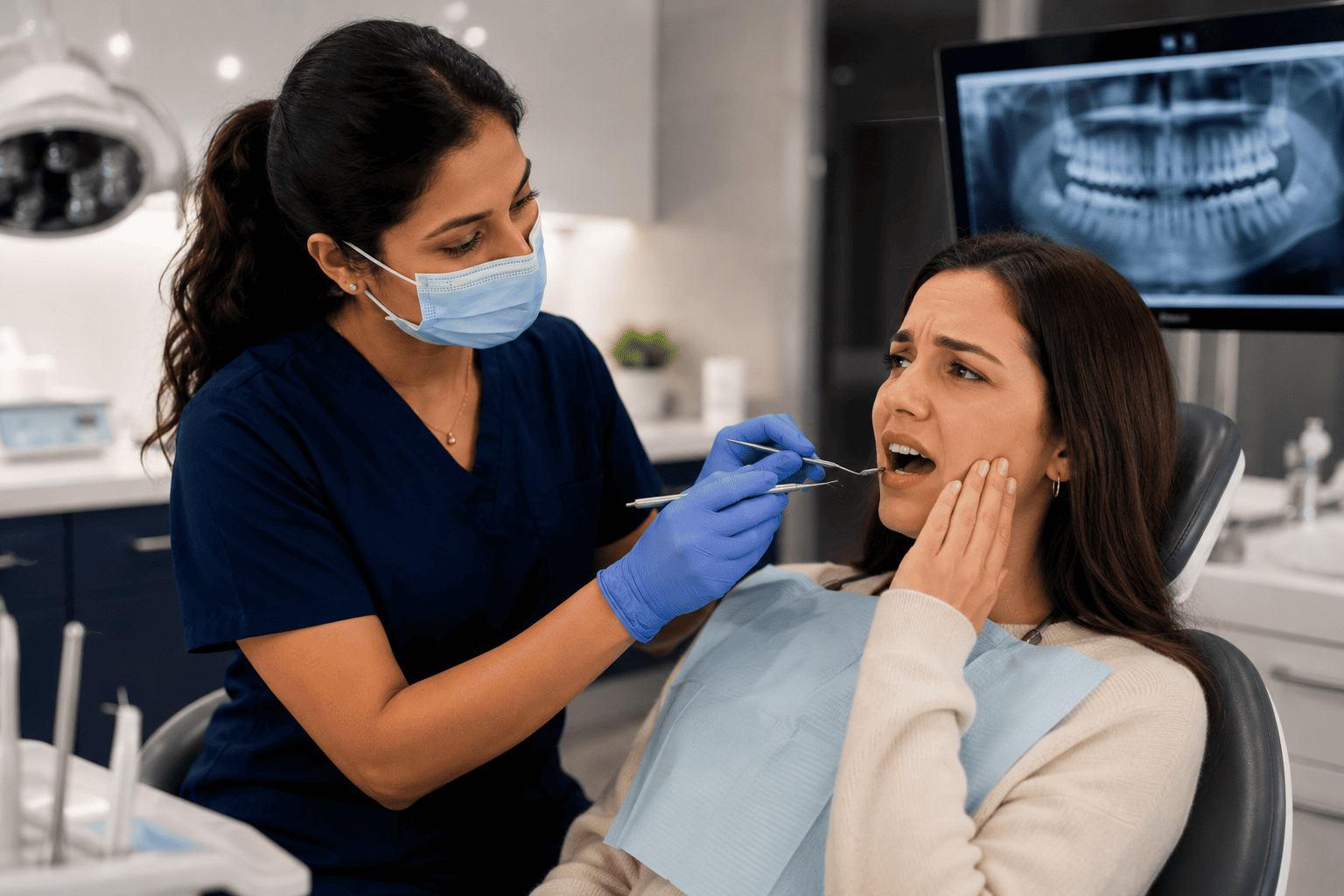
Dental problems have a way of showing up at the worst possible time. A tooth starts throbbing before work. A crown comes loose during dinner. A child chips a tooth at practice. If you are searching for an emergency dentist Phoenix AZ, you probably need clear direction quickly, not vague advice. Some dental issues can wait a few days. Others should be treated the same day.
At ProSmile Dental, we reserve time for urgent dental care because pain, swelling, infection, and broken teeth can affect sleep, eating, work, and overall health. The goal of emergency dentistry is to diagnose the problem, relieve pain, prevent the situation from worsening, and create a clear plan for definitive treatment.
Common Dental Emergencies
A dental emergency is any problem involving teeth, gums, jaw, or dental work that needs prompt attention to control pain, prevent infection, save a tooth, or stop bleeding. The most common emergencies we see include severe toothaches, cracked or broken teeth, knocked-out teeth, lost crowns or fillings, swelling, abscesses, trauma, and painful wisdom tooth flare-ups.
Not every urgent dental concern is dramatic. Sometimes a dull ache becomes constant. Sometimes sensitivity changes into sharp pain. Sometimes a small bump on the gum signals an infection draining from a tooth. If pain is getting worse, waking you up, or making it hard to chew, it deserves attention.
Dental pain that is severe, spreading, or paired with swelling is your body asking for help. Waiting rarely makes the treatment simpler.
Severe Tooth Pain
A toothache can come from a cavity, cracked tooth, infection, grinding, gum disease, sinus pressure, or an irritated nerve. Mild sensitivity to cold may be monitored briefly, but severe or lingering pain should be evaluated. Pain that lasts after hot or cold, throbs without stimulation, or wakes you at night can suggest nerve inflammation or infection.
Until you are seen, rinse gently with warm salt water, floss around the area to remove trapped food, and use over-the-counter pain relief as directed on the label if safe for you. Do not place aspirin directly on the gum or tooth. It can burn tissue. If swelling, fever, or a bad taste is present, call promptly.
Cracked, Broken, or Chipped Teeth
A cracked tooth emergency can range from a small enamel chip to a fracture that extends into the nerve. If a tooth breaks, save any pieces if you can, avoid chewing on that side, and call the dentist. A sharp edge can often be smoothed or covered temporarily, but deeper cracks may need bonding, a crown, root canal therapy, or extraction depending on the damage.
Even if pain is mild, a crack can worsen under biting pressure. Phoenix patients often delay treatment if the tooth only hurts occasionally, but intermittent pain when biting can be a classic sign of a crack. The earlier it is evaluated, the more options we may have to protect the tooth.
Knocked-Out Tooth
A knocked-out adult tooth is one of the most time-sensitive dental emergencies. Hold the tooth by the crown, not the root. If dirty, gently rinse with milk or saline. Do not scrub it. If possible, place it back in the socket and bite gently on gauze. If that is not possible, keep it moist in milk or a tooth preservation solution and call immediately.
Time matters. The best chance of saving the tooth is often within the first hour. Baby teeth should not usually be placed back into the socket because it can damage the developing adult tooth underneath, but the child should still be evaluated after trauma.
Swelling, Abscess, or Infection
Swelling in the gums, jaw, or face can be a sign of infection. A dental abscess may cause throbbing pain, tenderness, fever, bad taste, or a pimple-like bump on the gum. Infections do not reliably go away on their own. Antibiotics may help control spreading infection in some cases, but they do not remove the source. A tooth may need drainage, root canal therapy, extraction, or another treatment.
Call a dentist quickly if swelling is present. Go to the emergency room if swelling is spreading toward the eye or neck, if you have trouble swallowing or breathing, or if you feel seriously ill. Those symptoms can become dangerous and need medical attention immediately.
Call now for urgent symptoms
For severe pain, swelling, broken teeth, or dental trauma, call (602) 441-9900. Same-day emergency slots are reserved whenever possible.
Bleeding Gums: Emergency or Not?
Occasional bleeding when flossing may point to gum inflammation and should be addressed at a dental cleaning, but it is not always an emergency. Heavy bleeding after an injury, extraction, or surgery is different. Apply firm pressure with clean gauze and call for guidance. If bleeding will not slow after sustained pressure or if you feel lightheaded, seek urgent care.
Bleeding paired with facial injury, loose teeth, or jaw pain should be evaluated promptly. Trauma can affect more than the visible tooth surface, so X-rays may be needed.
Lost Crown, Filling, or Dental Appliance
A lost crown or filling can expose sensitive tooth structure and allow decay or fractures to worsen. If a crown comes off, save it and bring it to your visit. Avoid chewing on the tooth. Temporary dental cement from a pharmacy may help in some situations, but do not use household glue. A dentist needs to determine whether the crown can be recemented or whether the tooth needs additional treatment.
If an orthodontic wire, denture, or night guard is causing sores or preventing normal function, call for advice. These issues may not always be dangerous, but they can become painful quickly.
When to Go to the ER vs. an Emergency Dentist
For most tooth pain, broken teeth, lost crowns, and localized dental infections, an emergency dentist is the right first call. Dentists can diagnose tooth problems, take dental X-rays, treat the tooth, and provide a plan to stop the source of pain.
Go to the ER or call emergency medical services if you have trouble breathing, trouble swallowing, uncontrolled bleeding, major facial trauma, suspected broken jaw, swelling spreading toward the eye or neck, high fever with facial swelling, or symptoms that feel life-threatening. The ER can stabilize serious medical concerns, but it may not provide definitive dental treatment. After medical stabilization, you may still need dental care.
Same-Day Emergency Appointments in Phoenix
When you call ProSmile Dental for emergency dental care Phoenix, we will ask about your symptoms, timing, swelling, injury, medications, and whether you have dental work in the area. This helps us determine how quickly you should be seen and what appointment type is needed. If same-day care is available, we focus first on diagnosis and relief.
A same-day visit may include an exam, X-rays, pain relief recommendations, smoothing a sharp tooth, temporary repair, drainage, a prescription when appropriate, or starting definitive treatment. If the problem requires a longer procedure, we explain the next step and help you schedule it quickly.
How to Prevent Dental Emergencies
Not every emergency is preventable, but many risks can be reduced. Keep routine exams and cleanings so small cavities are found before they become toothaches. Wear a mouthguard for contact sports. Use a night guard if you grind or clench. Avoid chewing ice, hard candy, popcorn kernels, and non-food objects. Replace old fillings or crowns when your dentist sees cracks or leakage.
Phoenix's dry climate also makes hydration important. Dry mouth can increase cavity risk, especially when combined with frequent snacking or sugary drinks. If you wake with a dry mouth, use medications that reduce saliva, or sip coffee all day, mention it at your dental visit. Small habit changes can lower emergency risk.
Dental Emergency FAQs
Severe tooth pain, swelling, broken teeth, knocked-out teeth, uncontrolled bleeding, infection symptoms, and dental trauma can all count as emergencies.
ProSmile Dental reserves same-day emergency appointment times whenever possible. Call (602) 441-9900 so our team can guide you.
Intermittent pain can still signal a crack, cavity, or nerve problem. If it is recurring, worsening, or triggered by biting, schedule an exam.
Hold it by the crown, keep it moist in milk or a preservation solution, and call immediately. Adult teeth have the best chance when treated quickly.
The Bottom Line
If you are unsure whether your situation is urgent, call. A quick conversation can help you decide whether you need same-day dental care, a scheduled appointment, or emergency medical attention. Severe pain, swelling, trauma, infection signs, and broken teeth should not be ignored.
ProSmile Dental provides emergency dentistry in Phoenix with clear guidance and compassionate care. You can also request an appointment, review our contact details, or read our guides on Invisalign cost and teeth whitening options.