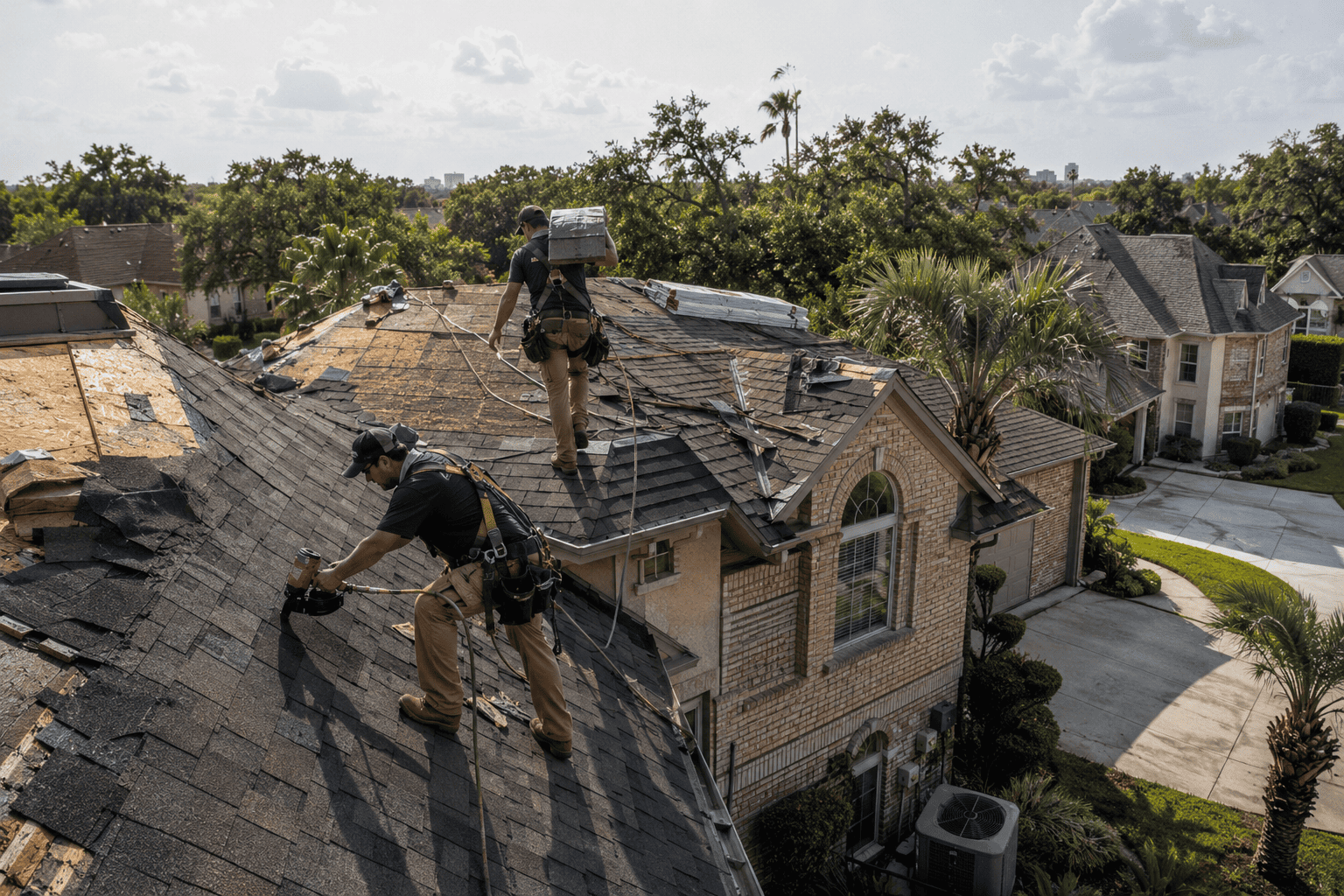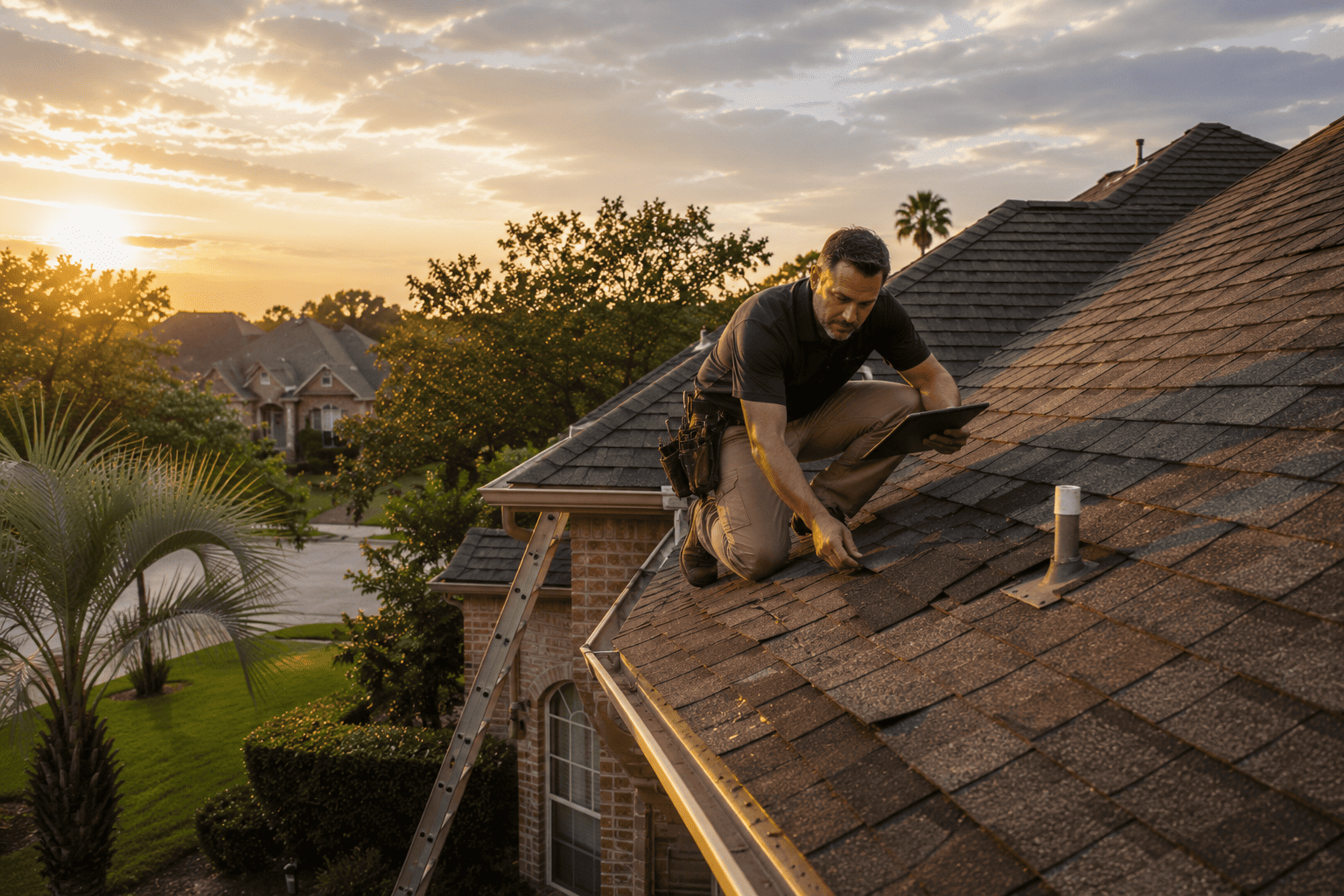
Houston storm damage roof repair starts with safety, documentation, and a clear inspection. After hail, high wind, or heavy rain, the roof may look fine from the street while shingles, flashing, vents, or decking have already been affected.
The goal is to stop active water entry, document visible storm conditions, and understand whether the roof needs repair, emergency tarping, or a larger replacement plan.
First: Stay Off the Roof
Do not climb onto a roof after a storm. Wet shingles, loose debris, lifted tabs, and hidden decking damage can make the surface unsafe. Start with a ground-level check and call a roofing professional if you see warning signs.
Post-Storm Checklist for Houston Homeowners
- Look for missing, lifted, or creased shingles from the ground.
- Check gutters and downspouts for shingle granules.
- Look for dents on gutters, vents, or metal flashing.
- Check ceilings, walls, and attic areas for water stains.
- Take photos of visible exterior damage and interior leaks.
- Write down the storm date and approximate time.
When Emergency Roof Repair Is Needed
If water is actively entering the home, emergency roof repair or tarping may be needed before a full assessment can happen. The first priority is limiting interior damage to drywall, insulation, flooring, and electrical areas.
| Problem | Likely next step | Why it matters |
|---|---|---|
| Active leak during rain | Emergency tarping | Stops additional interior damage while conditions are assessed |
| Missing shingles | Roof repair inspection | Exposed underlayment can fail quickly in Houston rain |
| Hail marks or dents | Documented storm inspection | Creates evidence close to the storm date |
| Large debris impact | Urgent safety review | Decking, framing, or flashing may be compromised |
Storm hit your neighborhood?
SafeGuard Roofing provides photo-documented inspections for Houston and Harris County homes after hail, wind, and heavy rain.
Get Free Storm InspectionHow Hail Damage Shows Up
Hail damage can appear as bruised shingles, missing granules, soft spots, damaged ridge caps, or dents on vents and gutters. It may not create a leak right away. Houston heat and repeated rain can turn weakened shingles into a larger issue over time.
If you are unsure whether replacement is necessary, compare the findings against our Houston roof replacement cost guide so you understand the repair-versus-replacement conversation.
What a Professional Storm Inspection Should Include
A proper storm inspection should include shingles, ridge caps, valleys, flashing, pipe boots, vents, gutters, attic conditions when accessible, and interior leak areas. The contractor should provide photos and explain the evidence clearly.
Fast does not mean rushed. After a storm, homeowners need a calm inspection, clear photos, and a recommendation they can understand.
Insurance Claim Documentation
If storm damage appears claim-worthy, documentation matters. Keep photos, inspection notes, storm dates, emergency repair invoices, and communication with your insurance company in one place. Your insurer determines coverage, but better documentation helps reduce confusion.
FAQ: Houston Storm Damage Roof Repair
How soon should I schedule an inspection after hail?
As soon as the weather clears and it is safe. Early documentation gives a clearer record close to the storm date.
Does every storm-damaged roof need replacement?
No. Some roofs need targeted repair, while others have widespread damage. The recommendation should follow the evidence.
Do you offer emergency tarping?
Yes. SafeGuard Roofing offers emergency tarping for active leaks and storm openings in the Houston area.